Skip to main content
Cyber Security and Resilience Community
Cyber Security and Resilience Community
People
Faculty
Research Scientists
Postdoctoral Fellows
All People
Research Groups
Cyber Security and Resilience Technology (CyberSaR)
Roberto Di Pietro Research Group (R-Pietro)
Security Research Bearing Experimental Results (SeRBER)
Research Strategy
Spatial regression
Spatial Self-Confounding: Smoothness-related estimation bias in spatial regression models
1 min read ·
Thu, Oct 30 2025
News
Spatial regression
Maximum Likelihood
Estimation
Gaussian random fields
spatial statistics
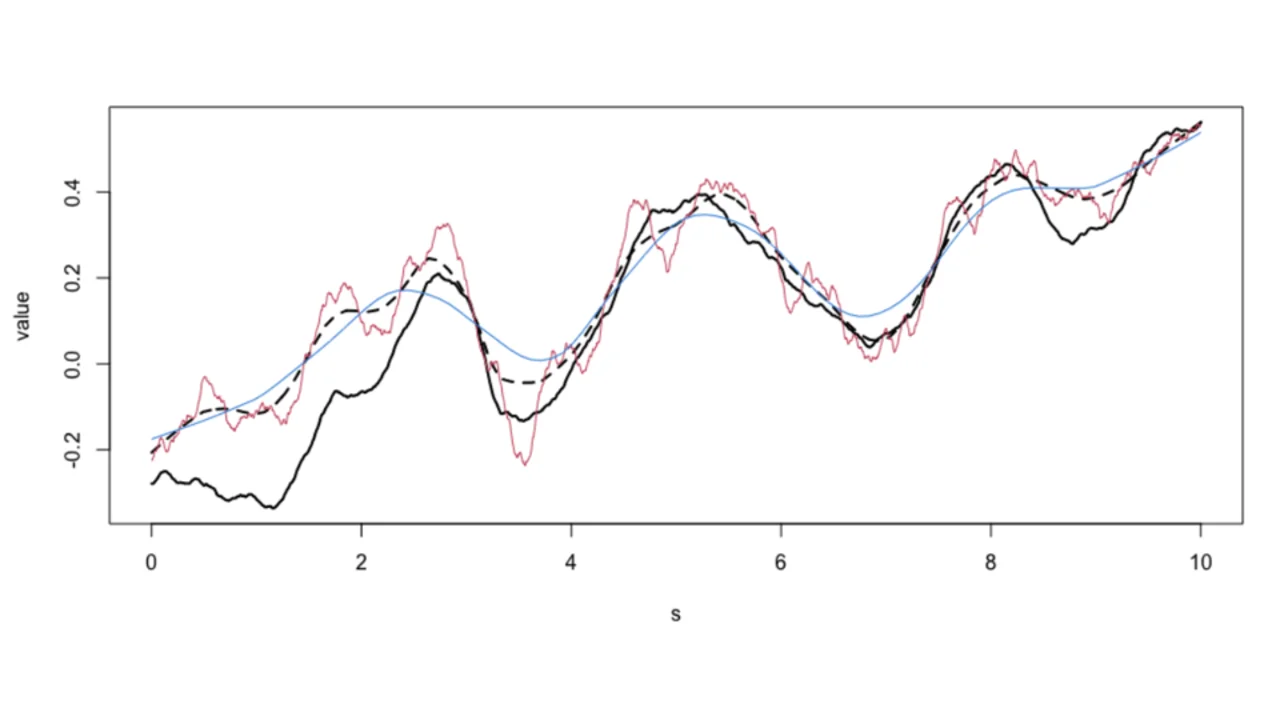
Spatial regression models are widely used to capture the relationship between observations and covariates, employing Gaussian random fields to account for spatial variability not explained by the covariates. A new study by researchers David Bolin and Jonas Wallin addresses a critical yet often overlooked problem in these models: smoothness-related spatial self-confounding. The work examines how misspecified covariates, particularly when there are differences in smoothness between variables, can lead to severe and counter-intuitive biases in the estimation of regression parameters. These